To Our Brothers and Sisters in Mindanao,
There are moments when a nation is reminded of what truly matters.
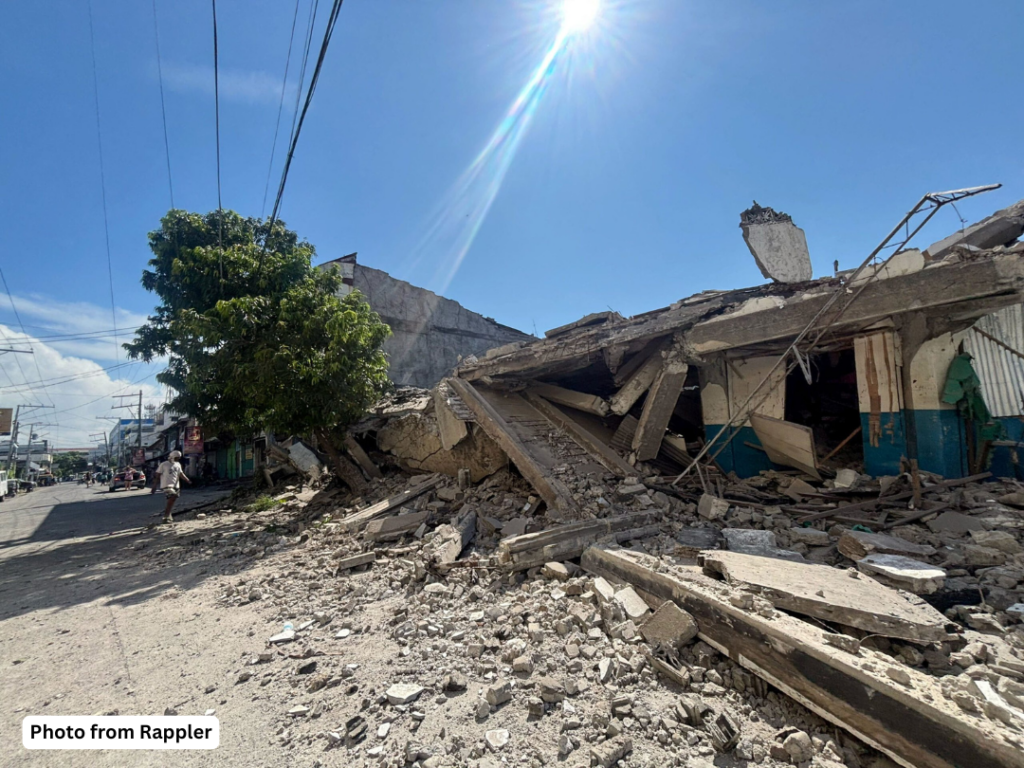
The recent earthquake that struck Mindanao has left communities shaken, homes damaged, livelihoods disrupted, and families facing uncertainty. For many, the coming days will be filled not with headlines or political debates, but with the urgent realities of finding shelter, restoring security, and rebuilding lives.
While politicians count votes and factions count victories, families in Mindanao are counting what remains. A mother checks whether her children are safe. A father surveys the damage to a lifetime of work. An elderly resident searches for shelter. A young person wonders what tomorrow will bring.
These are the realities that deserve the nation’s attention.
To all those affected, please know that you are not alone.
Across our archipelago, Filipinos are watching with concern and compassion. They see not strangers, but fellow citizens. They recognize that in times of disaster, geography becomes irrelevant. The suffering of Mindanao is the concern of the entire nation.
There is a contrast that should trouble us all.
Even as communities in Mindanao grapple with the aftermath of a devastating earthquake, political factions in Manila continue to expend enormous energy defending their positions, asserting their legitimacy, and prosecuting their rivalries. Yet not far from the earthquake’s epicenter are families who have little interest in political theater. Their immediate concerns are shelter, safety, food, medicine, and the daunting task of rebuilding their lives.
History has a way of clarifying priorities.
When homes are damaged and communities are hurting, the question is no longer who won the latest political battle or whose narrative prevailed in the halls of power. The question becomes far simpler and far more consequential:
Will those entrusted with public office rise above political ambition and get to work rebuilding shattered structures and shattered lives?
The people of Mindanao deserve an answer measured not in speeches, press conferences, procedural victories, or carefully crafted narratives, but in relief delivered, communities restored, and hope renewed.
At moments such as these, leadership is not demonstrated by the ability to command attention. It is demonstrated by the willingness to direct that attention toward those who need it most.
This is not the moment for spectacle.
This is the moment for service.
Relief operations must move swiftly. Emergency assistance must reach affected communities without delay. Critical infrastructure must be inspected and restored. Medical services must remain accessible. Resources must be deployed efficiently, transparently, and with a sense of urgency equal to the needs on the ground.
Yet recovery cannot be left to the government alone.
Every organization, every university, every business, every civic group, every faith community, and every Filipino with the means to help should ask a simple question: What can I do?
Whether through donations, volunteerism, technical expertise, logistical support, or simply extending a helping hand to those in need, each contribution matters. The work of rebuilding belongs not only to those directly affected, but to all who believe that national solidarity must be more than a slogan.
The Philippines has endured countless trials. We have faced earthquakes, typhoons, floods, volcanic eruptions, and crises of every kind. What has carried us through is not merely resilience. It is the willingness of ordinary Filipinos to stand beside one another when circumstances demand it.
The people of Mindanao have shown remarkable courage in the face of adversity. They deserve not only our sympathy, but our active support. They deserve a nation willing to match words with action.
To our brothers and sisters in Mindanao: your fears are understood, your losses are acknowledged, and your recovery matters to all of us.
The road ahead will not be easy. Homes will need rebuilding. Communities will need healing. Lives will need restoring. But the strength of a nation is revealed not when circumstances are favorable, but when adversity calls upon its people to act.
May this earthquake remind us that beyond our differences, we remain one people sharing one future.
When the history of this tragedy is written, may it record not only the force of the earthquake, but the force of a nation’s compassion. May it tell the story of Filipinos who chose service over self-interest, unity over division, and responsibility over indifference.
For Mindanao.
For one another.
For the Philippines.