by Denise Pallasigue and Trisha Mae Roque, BS Mechanical Engineering students from UP Diliman, recipients of The Sherwin O Thesis Support Grant. Trisha is also a recipient of Jose and Fae Albano Study Grant.
Meet our scholars and discover the thesis projects that showcase their hard work, innovation, and dedication.
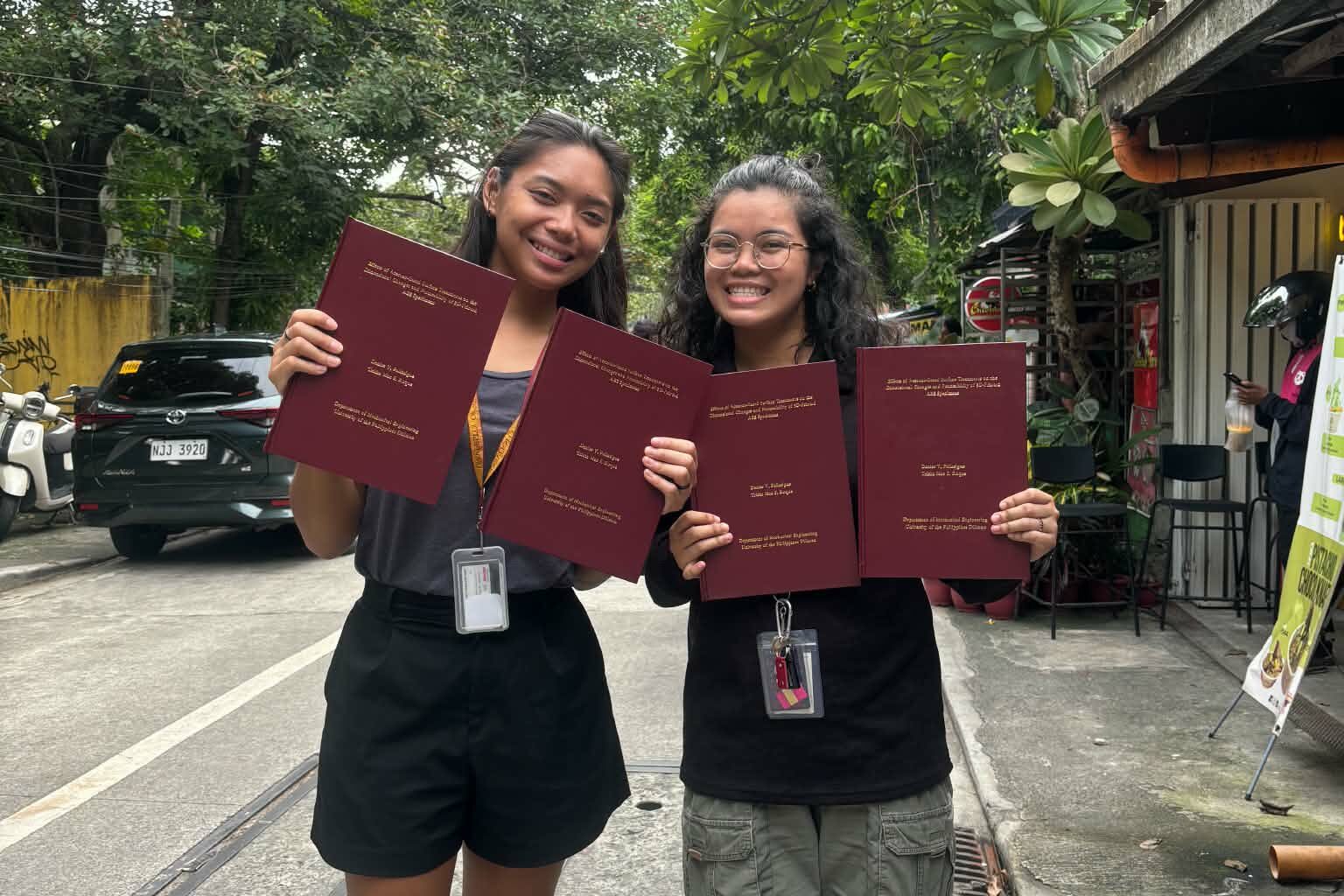
We commenced the final year of our college lives as Mechanical Engineering students with the mere hope of ending the semester with our Sablay hanging from our shoulders. In truth, our thesis and capstone project initially portrayed themselves as obstructions to the completion of our curriculum. Challenges in the form of topic selection, material procurement, and financial constraints rendered us apprehensive of the paths we could venture into. Several months of research went into the identification of domains through which we could devote time and effort in furtherance of engineering. Through the expertise of our thesis adviser, Mr. Balbin, in the additive manufacturing field, the avenues dwindled down from compliant mechanism to topology optimization, until we arrived at the very core of our work, the permeability of three-dimensional printing products. Our primary concern centered on the question, “What impact does this impart in the field?” The answer, as we hold close to our hearts, stems from the novelty of 3D printing as an additive manufacturing process that enables the creation of complex and customized parts. Think of the conventional printing machines that produce two-dimensional hard copies of electronic data, but elevated far more such that they can bring forth three-dimensional components like household items, medical prosthetics, and automotive parts. 3D printing remains largely unexplored in terms of its water immersion applications. With the vastness of the functions it serves in diverse fields, how limitless could it become if custom-built components intended for underwater environments are further delved into?
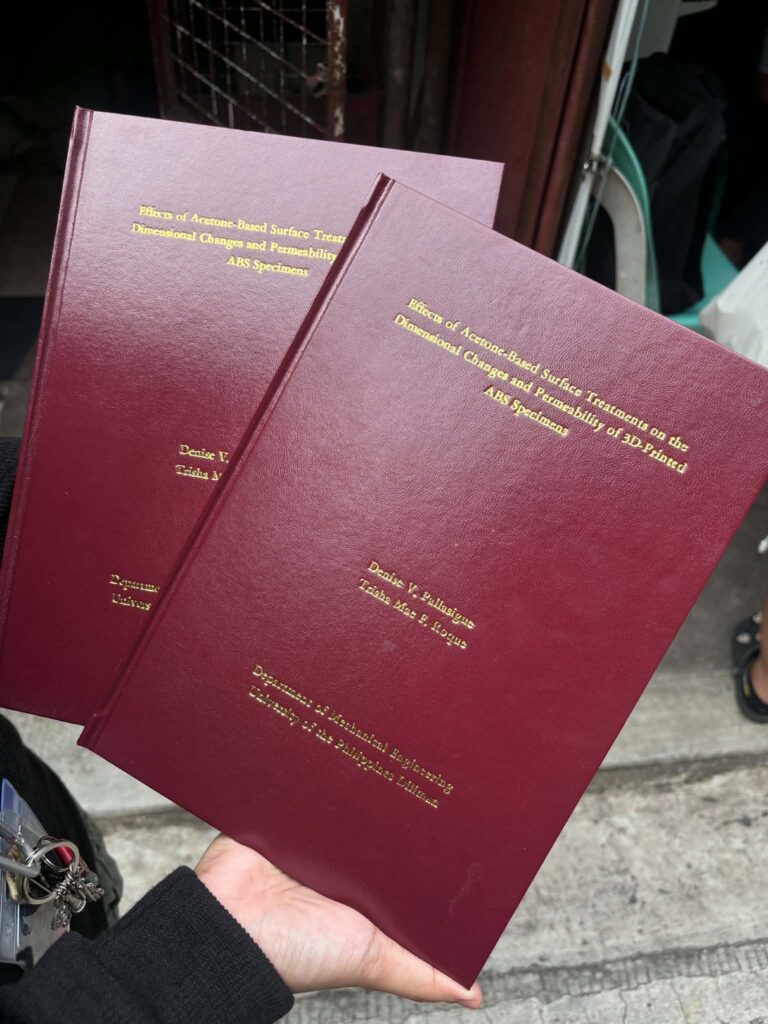
Our study employed acetone-based surface treatments, particularly acetone vapor smoothing and acetone-ABS slurry, to assess the dimensional changes and permeability of 3D-printed ABS specimens. Varying exposure times and slurry ratios were investigated. Dimensional changes were evaluated by measuring the length, height, and thickness of the specimens. Permeability was assessed through water immersion testing using a custom-built permeability tester under a one-meter hydrostatic pressure condition. The findings showed that both treatments altered specimen dimensions. Specifically, shrinkage was consistently evaluated in the length and height, while expansion occurred in the thickness. Furthermore, no detectable water permeation was observed in both the treated and untreated specimens. The recorded water height reduction was attributed to evaporation rather than permeation under ambient testing conditions. Overall, the baseline fabrication parameters produced impermeable specimens under the applied pressure condition. The acetone-based surface treatments maintained this impermeability while significantly altering dimensional stability.
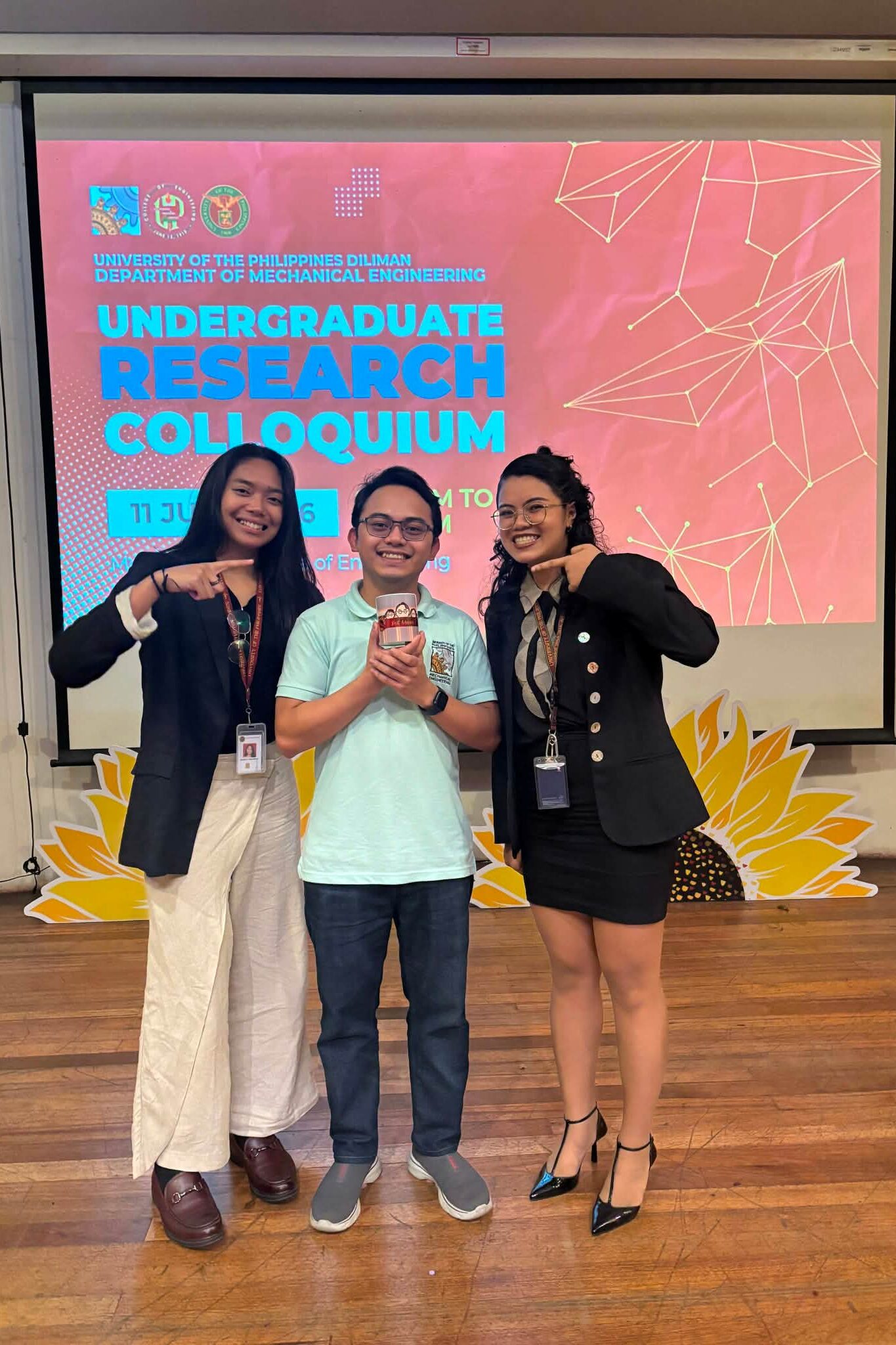
While the findings are significant, the journey that led to them is even more meaningful. The challenges tested not only our technical knowledge but also our perseverance. We holistically acknowledge that we would not be here without the support given to us. Our study required us to design and fabricate a custom-built permeability tester before we could obtain the findings. The financial assistance enabled us to procure the necessary materials to fabricate the tester and conduct multiple tests that are consequential to our study. The generosity extended to us made this journey possible. It has shown us the true value of support and instilled in us the strong desire to contribute back to the community as we achieve our goals.
Read the full Study HERE.
===
Denise Pallasigue and Trisha Mae Roque are both BS Mechanical Engineering students from the UP Diliman