Engineering for a Changing Philippines
There is a demographic change taking place in the Philippines that deserves far more attention than it is getting.
Filipino families are having fewer children.
This is not simply a matter of changing lifestyles or personal choices. It is a structural shift that will eventually affect our economy, our workforce, our communities—and the infrastructure we build.
The numbers are already telling us something important.
According to the 2024 Census, only 26.7% of Filipinos are below 15 years old, down from 30.7% in 2020. At the other end of the age spectrum, 6.6% of our population is already 65 or older, while 10.2% are 60 and above.
The Philippines is therefore approaching the point at which it will formally be considered an ageing society. Depending on the demographic projection and definition used, that threshold is likely to be reached around the end of this decade.
At the same time, our fertility rate has fallen to about 1.7 children per woman—well below the replacement level of 2.1.
This is not a crisis.
But it is a signal.
And engineers should be paying attention.
We are already experiencing it ourselves
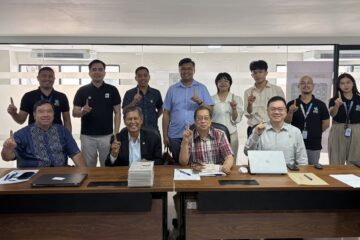
At UPERDFI, we don’t have to look very far to see what this demographic transition means.
Approximately 67% of our membership is composed of members nearing 70 years old or older.
This presents challenges for membership engagement, leadership succession and participation. But it also gives us something valuable: a front-row seat to a major demographic transformation taking place in Philippine society.
Our own experience reminds us that ageing is not an abstract statistical phenomenon.
It is about people.
People who have built careers, raised families, contributed to society and accumulated knowledge and experience that remain valuable.
The question is how we design institutions—and eventually the country itself—so that people can continue to participate meaningfully for as long as they are able and willing.
We have been building for a different Philippines
For much of our history, infrastructure planning assumed a young and rapidly growing population.
More people meant more classrooms, more houses, more roads, more jobs, more commercial centres and more utilities.
That model worked because the demographic pyramid was broad at the bottom: many children growing into many workers.
But the shape of that pyramid is changing.
The Philippines of 2040 will not simply be a larger version of today’s Philippines. It will be an older country, with smaller families, fewer young people entering the workforce and more people living into their 70s, 80s and beyond.
That should change the questions we ask when we plan infrastructure.
Instead of asking only:
“How many people will live here?”
we should also ask:
How old will they be?
How many will be working?
How many will live alone?
How many will need healthcare or mobility assistance?
How many children will there be?
And how do we make the infrastructure we build today adaptable to those changes?
Hospitals are only part of the answer
An aging population will certainly require more healthcare capacity. But the answer is not simply to build more hospitals.
We will need a different healthcare ecosystem.
More community health centres. More rehabilitation facilities. More geriatric care. More home-based healthcare. More assisted living. More telemedicine and remote monitoring.
The same principle applies to housing.
A house designed for a young family is not necessarily suitable for an 80-year-old living alone. Simple features—level entrances, wider doors, accessible bathrooms, good lighting, non-slip floors and emergency communication systems—can make an enormous difference.
These are not exotic technologies.
They are simply examples of good engineering responding to the people who will actually use our buildings.
Even our transportation needs to change
Consider the ordinary journey of an elderly Filipino.
A flight of stairs at an MRT station. An uneven sidewalk. A jeepney that requires climbing. A pedestrian crossing that changes too quickly. A terminal without adequate seating.
None of these may be particularly difficult for a healthy 25-year-old.
For an 80-year-old, they can become barriers to participation in society.
Perhaps one useful test for our infrastructure is this:
Can an 80-year-old safely and independently use it?
If the answer is no, perhaps we need to rethink the design.
Age-friendly infrastructure is not necessarily special infrastructure. Often, it is simply better infrastructure—better sidewalks, safer crossings, accessible public transport, clearer signs, adequate lighting, shaded walkways and conveniently located services.
And what works for the elderly usually works for everyone else, too.
We should also rethink our schools
Demographic change will eventually affect education infrastructure.
If there are fewer children, the question will no longer be simply how many classrooms we need.
We should ask what those facilities can become.
Schools and other public facilities could be designed for adaptive reuse—as community learning centres, health facilities, senior activity centres, disaster shelters, digital hubs or lifelong-learning centres.
The infrastructure we build should be capable of changing with the population.
That is an important principle for the next generation of engineers:
Don’t just design for today’s requirements. Design for tomorrow’s flexibility.
Disaster resilience takes on a new meaning
The Philippines is one of the world’s most disaster-prone countries. An aging population adds another dimension to disaster preparedness.
An evacuation plan that works for a young and mobile population may not work as well for someone who is 80, lives alone and has difficulty walking.
We therefore need to consider mobility, chronic illness, medication dependency, visual and hearing limitations and other vulnerabilities when designing evacuation systems and emergency infrastructure.
This is where engineering, data and community planning can come together.
We should know not only where vulnerable people are, but also whether the roads, transport systems, evacuation centres, electricity and communications systems around them can support them during an emergency.
And what about families?
There is another dimension to declining fertility that deserves a thoughtful conversation.
It is tempting to say that young Filipinos simply do not want children anymore.
The reality is more complicated.
The cost of housing, long commuting times, childcare, education and the demands of modern work all influence family decisions.
This means that infrastructure can also be family infrastructure.
Affordable and accessible housing. Reliable public transportation. Good schools close to communities. Safe neighbourhoods. Childcare facilities. Shorter and more predictable travel times.
These are not merely conveniences.
They help determine whether raising a family is manageable.
If we want a healthy demographic future, we should not only prepare for an aging population. We should also make it easier for those who want children to have them.
Engineering a better future
The demographic transition should not frighten us.
It should sharpen our thinking.
The Philippines will need to move from planning infrastructure primarily around population growth to planning around population structure.
That means designing cities for all ages. Building healthcare around longevity. Making transportation accessible. Preparing for a smaller future workforce. Designing buildings that can adapt. And creating communities where both young families and older Filipinos can thrive.
There is also a tremendous opportunity here for Philippine engineering.
Asia is aging. Japan, Korea, China, Singapore and many other societies are facing similar challenges, in different forms and at different speeds.
The Philippines has the opportunity not merely to respond to this trend, but to become a source of engineering solutions for an aging Asia.
And perhaps UPERDFI has a particular reason to engage in this conversation.
With a membership that is itself predominantly composed of experienced engineers approaching their 70s and beyond, we are not simply observers of this demographic transition.
We are part of it.
Our generation has spent decades building the country’s physical infrastructure, institutions and industries.
Perhaps one of our next contributions is to help shape the infrastructure needed by the country we are leaving to the next generation.
The challenge is not to build a country for an ageing population.
It is to build a country where people can age well—while giving younger Filipinos the opportunity to build families, careers and communities of their own.
That is not a dark vision of the future.
It is a very worthwhile engineering project.
And perhaps, in keeping with UPERDFI’s mission, it is another opportunity to put engineering where it belongs:
in the service of better lives.