Nuclear Power: Are We Ready?
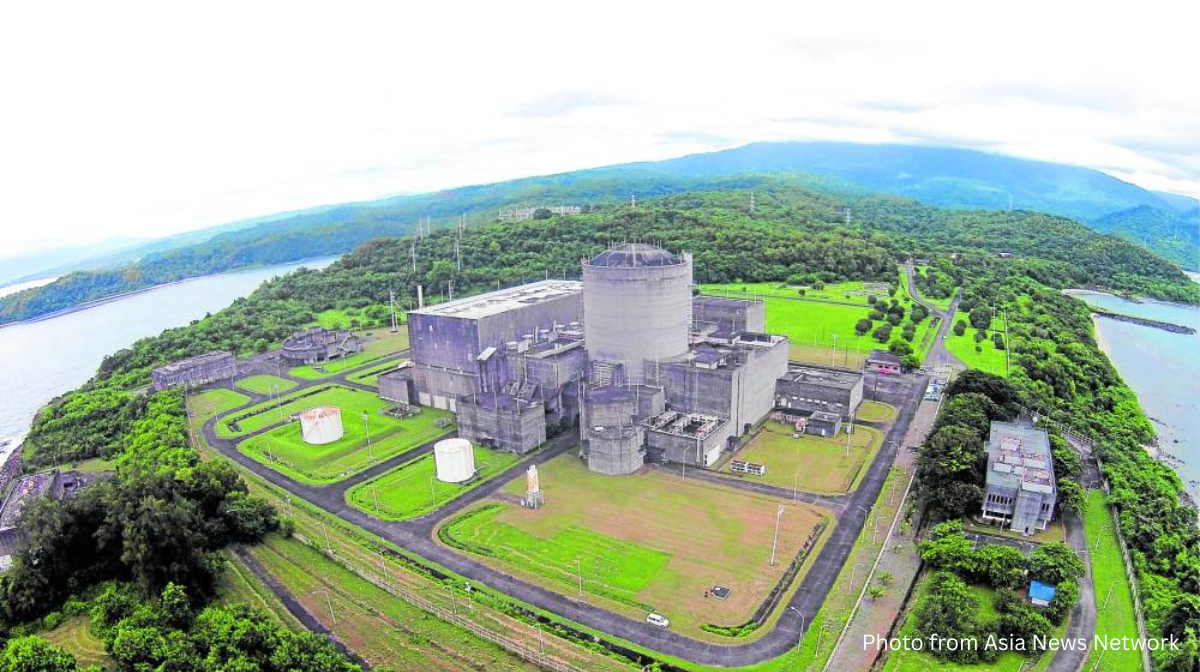
There is once again a serious push to bring nuclear power into the Philippines.
I believe we should have the conversation.
Our electricity demand is growing. We need reliable power. We need to decarbonize. And we cannot afford to close the door on any technology that could contribute to a secure and competitive energy system.
But I think we are asking the wrong question.
The question should not simply be: “Should the Philippines build a nuclear power plant?”
The more important question is:
“Are we ready to become a country that can safely operate nuclear power?”
That is a very different question.
And we need to be brutally honest about the answer.
A nuclear plant is the easy part
We have excellent engineers in this country. We can design and build complicated infrastructure. We can procure technology from the world’s leading nuclear vendors.
So, yes, I believe the Philippines can build a nuclear power plant.
But building the plant is only one part of the challenge.
The real test is whether we can create the ecosystem around it—and sustain that ecosystem for decades.
A nuclear reactor does not operate in isolation. It sits at the center of a complex system involving the power grid, regulation, emergency response, security, human resources, financing, waste management, and public trust.
And every one of these has to work.
Start with the grid
Take the power grid.
A modern nuclear reactor can produce 1,000 megawatts or more. That is a very large single generating unit for the Philippine system.
The issue is not simply connecting the plant to the grid.
What happens if that reactor suddenly trips?
Can the grid absorb the loss without causing instability or, worse, another major blackout?
That means we need adequate transmission capacity, stronger interconnections, sufficient reserves, and a grid designed to withstand the sudden loss of a major generating unit.
You don’t put a very large reactor on a weak grid and expect the reactor to solve the grid’s problems.
The grid has to be ready first.
Then there is the regulator
Nuclear safety cannot depend on who happens to be in Malacañang.
We need an independent, technically competent nuclear regulator with the authority to say no.
No to an operator that is cutting corners.
No to a contractor that fails to meet standards.
No to a politician demanding that a permit be expedited.
No to an investor who wants to save money by compromising safety.
That independence has to be real—not merely written into a law.
And it has to survive changes in administration.
And then we need people
This may be the most underestimated requirement.
Nuclear power is ultimately a people business.
We need nuclear engineers, reactor operators, radiation specialists, electrical and mechanical engineers, maintenance professionals, emergency responders, cybersecurity specialists and, importantly, regulators who understand the technology they are regulating.
We cannot start recruiting these people when the reactor is almost ready to operate.
We should be developing them now.
Our universities have an important role here. So does industry. So do government and professional organizations.
If the Philippines is serious about nuclear power, we should already be building the human-capital program that will support it.
What happens when things go wrong?
Another uncomfortable question:
What happens if something goes wrong?
Nuclear accidents are rare, but the consequences can be serious. Therefore, emergency preparedness cannot be theoretical.
We need radiation monitoring, emergency communications, medical capability, evacuation plans, trained first responders and regular drills.
And the people living around a nuclear facility need to understand these systems.
We cannot tell communities, “Don’t worry. Everything is safe.”
They have every right to ask:
“What happens if it isn’t?”
Our answer has to be credible.
We also have to deal with the waste
Spent nuclear fuel does not simply disappear.
We need a long-term national policy for radioactive waste and spent fuel—from storage and transportation to eventual disposal.
This cannot be somebody else’s problem 30 years from now.
If we benefit from nuclear power today, we have a responsibility to deal with its consequences today.
Nuclear security is also national security
A nuclear plant is not just another power station.
It is critical national infrastructure.
We have to protect it against physical attacks, sabotage, insider threats and cyberattacks.
That requires coordination among the operator, regulator, government, security agencies and cybersecurity professionals.
Again, this is not something we can bolt on after construction.
And finally: who pays?
Nuclear power requires enormous upfront investment and carries significant construction and financing risks.
We need to be very clear about who carries those risks.
Government?
Consumers?
Private investors?
Some combination?
There is nothing wrong with government supporting nuclear power. But we should not hide the financial risks behind optimistic projections.
A nuclear program has to make economic sense—not just engineering sense.
So, am I against nuclear power?
No.
Quite the opposite.
I believe nuclear power deserves a serious place in the Philippine energy debate.
But I am against rushing into nuclear power simply because we need more electricity.
There is a difference between being enthusiastic about a technology and being prepared to operate it.
The Philippines has many things going for it. We have excellent engineers. We have strong universities. We have an increasingly sophisticated industrial sector. We have a large and growing demand for reliable electricity.
But we also have institutional weaknesses that we should not pretend don’t exist.
And nuclear power is precisely the kind of technology that exposes institutional weaknesses.
That is why I believe the discussion should begin with readiness, not procurement.
Before we select a reactor, let’s strengthen the grid.
Before we commission a plant, let’s build the regulatory capability.
Before we need operators, let’s train them.
Before we have spent fuel, let’s know where it will go.
Before an emergency happens, let’s demonstrate that we can respond.
And before we ask the public to trust nuclear power, let’s give them good reason to trust the institutions responsible for it.
This is where engineers come in
As engineers, we should resist the temptation to reduce this debate to “pro-nuclear” versus “anti-nuclear.”
That is politics.
Our job is different.
Our job is to ask whether the system will work.
We should ask the uncomfortable questions. We should challenge assumptions. We should examine the numbers. We should identify risks before they become problems.
And when the evidence says we are ready, we should have the courage to move forward.
But if the evidence says we are not ready, we should have the discipline to prepare first.
That, to me, is responsible engineering.
Nuclear power could become an important part of the Philippines’ energy future. But the reactor should not be our first investment.
Our first investment should be in the capability to operate it safely.
Because ultimately, the question is not whether Filipinos can build a nuclear power plant.
We can.
The question is whether we can build and sustain the institutions, people, systems and culture that will keep it safe for the next 60 years.
That is the standard we should set for ourselves.
And if we are going to do it, let us do it properly.
That is what engineering better lives is all about.