Trust: The Currency We Cannot Afford to Lose
There are many things an organization can put on its balance sheet: assets, investments, projects, partnerships and, of course, money.
But there is one asset that does not appear in any financial statement.
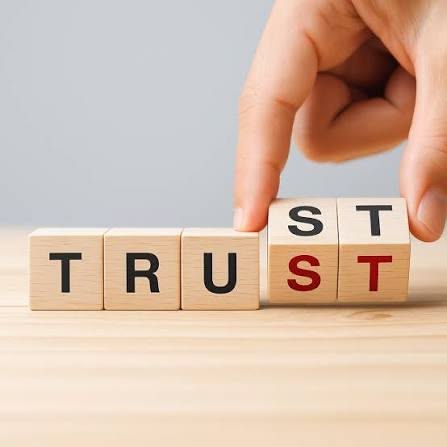
Trust.
And for a foundation like UPERDFI, I would argue that trust is the most important currency we have.
We cannot buy it. We cannot demand it. And we cannot rebuild it overnight once it is lost.
We can only earn it—one decision, one commitment and one relationship at a time.
Trust takes years to build
UPERDFI did not wake up one morning with the confidence of its donors, partners, alumni and the UP community.
That confidence has been built over many years.
It has been built by people who gave their time without expecting anything in return. By donors who entrusted us with their resources. By volunteers who believed that supporting engineering education, research and our scholars was worth their effort. By partners who chose to work with us because they believed we would do what we said we would do.
And, perhaps most importantly, it has been built by generations of UPERDFI leaders and staff who understood a simple responsibility:
We are custodians of something that belongs to a purpose bigger than ourselves.
That is a powerful responsibility.
When a donor gives to UPERDFI, the money may leave the donor’s account. But the trust does not.
The trust stays with us.
A changing world
Recent events surrounding NVIDIA and its legendary founder, Jensen Huang, provide an interesting reminder of how fragile trust can become in today’s environment.
NVIDIA is an extraordinary company. Its success has been closely associated with the leadership and vision of one individual. But when questions arise around a highly visible leader, the questions can quickly become questions about the institution itself.
That is the world we now live in.
Information travels instantly. Opinions form before all the facts are known. A private matter can become a public issue in hours. Artificial intelligence can amplify both truth and misinformation. A single post can reach millions before an organization has had time to understand what happened.
The lesson is not that we should become suspicious of one another.
Quite the opposite.
It is that trust has become even more valuable—and more precious.
In such a world, an organization’s reputation cannot depend solely on what it says about itself.
It is built on what people have consistently experienced from it.
We have to keep earning it
This is where I believe UPERDFI has an advantage.
We have history.
We have relationships.
We have people who have stayed involved for decades because they believe in what UPERDFI stands for.
But history alone is not enough.
Every generation inherits the trust built by the previous one. And every generation has the responsibility to protect it—and add to it.
That means doing the small things well.
Being transparent with our donors.
Being careful with every peso entrusted to us.
Delivering what we promise.
Treating our scholars and faculty beneficiaries with dignity.
Being fair to our partners.
Being willing to explain our decisions.
Admitting when something does not go according to plan.
And making sure that the organization remains bigger than any one person.
These may sound like ordinary things.
They are not.
They are the daily deposits we make into the bank of trust.
Trust is also about relationships
There is another dimension to trust that we sometimes overlook.
People do not trust institutions in the abstract.
They trust people within institutions.
They trust the person who answers their call. The staff member who follows through. The volunteer who remembers. The officer who keeps a promise. The leader who is willing to listen.
That is why culture matters.
We can have excellent policies, systems and controls. But ultimately, people judge an organization by how it behaves.
A donor who receives a thoughtful update feels differently from one who never hears from us.
A scholar who feels genuinely cared for remembers that experience long after graduation.
A partner whose contribution is recognized is more likely to walk with us again.
Trust grows through these human encounters.
The currency for the next generation
As UPERDFI looks ahead, perhaps the question is not simply how much we can raise, how many projects we can undertake or how large our investment portfolio can become.
Those things matter.
But perhaps an equally important question is:
Can we continue to be the organization that people instinctively trust?
If we can, the rest becomes possible.
Donors will continue to entrust us with resources.
Partners will continue to work with us.
Our alumni will continue to participate.
Our scholars will continue to believe that somebody cares about their future.
And future leaders will inherit something far more valuable than money.
They will inherit credibility.
That is the real legacy we should leave.
The world around us is becoming more complicated, more connected and, in some ways, more uncertain.
Technology can change overnight. Leaders can rise and fall. Institutions can be celebrated one day and questioned the next.
Through all of that, one thing remains remarkably constant:
People want to know whom they can trust.
For UPERDFI, that is both our greatest responsibility and our greatest opportunity.
Let us continue to earn that trust.
Quietly. Consistently. Every day.
Because in the end, trust is the only currency we can deal in that becomes more valuable the more faithfully we use it.